


Park and Ride Planning – Part 1: Four Steps to Successful Implementation
Park and ride has become a key consideration in urban planning in the 2020s, as municipalities and cities work towards ambitious climate targets and carbon neutrality. Urbanisation, together with the need to reduce congestion in city centres and transport-related emissions, calls for new and flexible solutions. Seamlessly combining private car use with public transport is one of the most effective ways to encourage people to switch to more sustainable modes of transport.
An empty tarmac car park next to a railway line is no longer enough. Modern public transport requires park-and-ride facilities to offer a high standard of service and an excellent user experience in all weather conditions. This article takes an in-depth look at four steps towards creating a successful, attractive and long-lasting park-and-ride solution.
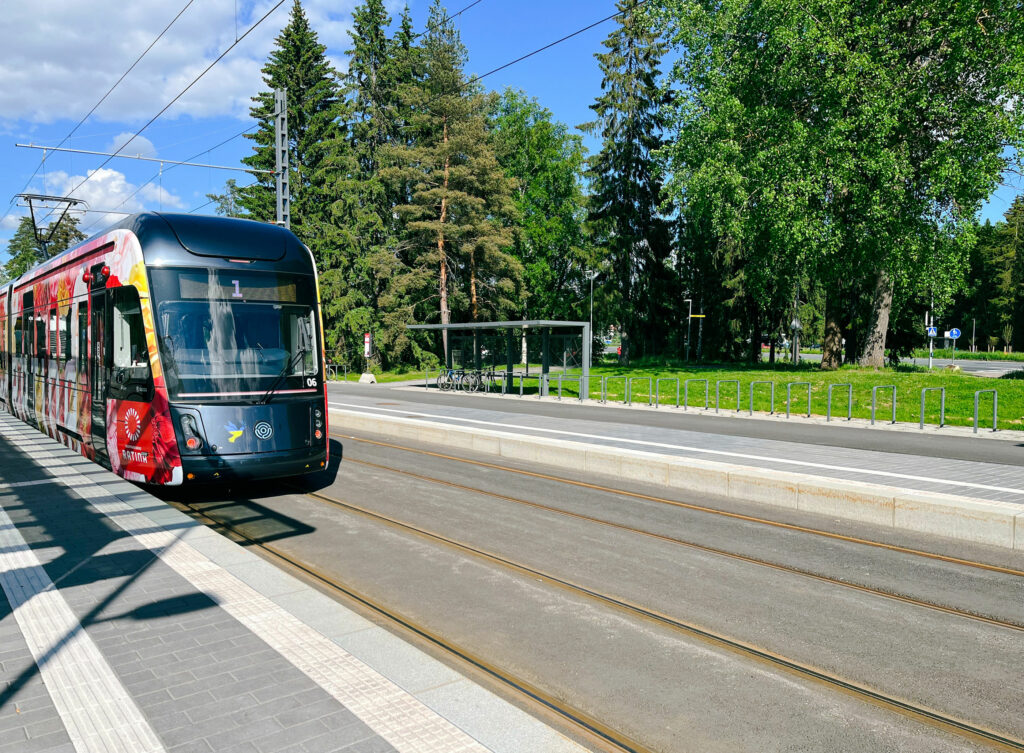
Tampere provides an excellent example of park-and-ride planning, where the journey remains smooth and uninterrupted. The installation shown features AluShel’s CPH bicycle shelters and BAR bike racks.
Background: Why is park and ride a critical part of the journey?
In Finland, the development of park-and-ride facilities is guided by several public authorities. In 2023, the Finnish Transport Infrastructure Agency published operating principles for railway station areas (guideline 36/2023), setting out how rail travel connections should be developed through regional cooperation. National policies emphasise the importance of seamless, multimodal journeys: a park-and-ride facility is not an isolated car park, but part of a wider transport system.
Traficom’s overview of the current state of park and ride in Finland shows that the Finnish MAL urban regions are at different stages of regional planning. The Helsinki region (HSL), Tampere and Turku are the furthest ahead in development, but active work is underway across all the regions. This means that a significant proportion of Finland’s park-and-ride potential remains untapped.
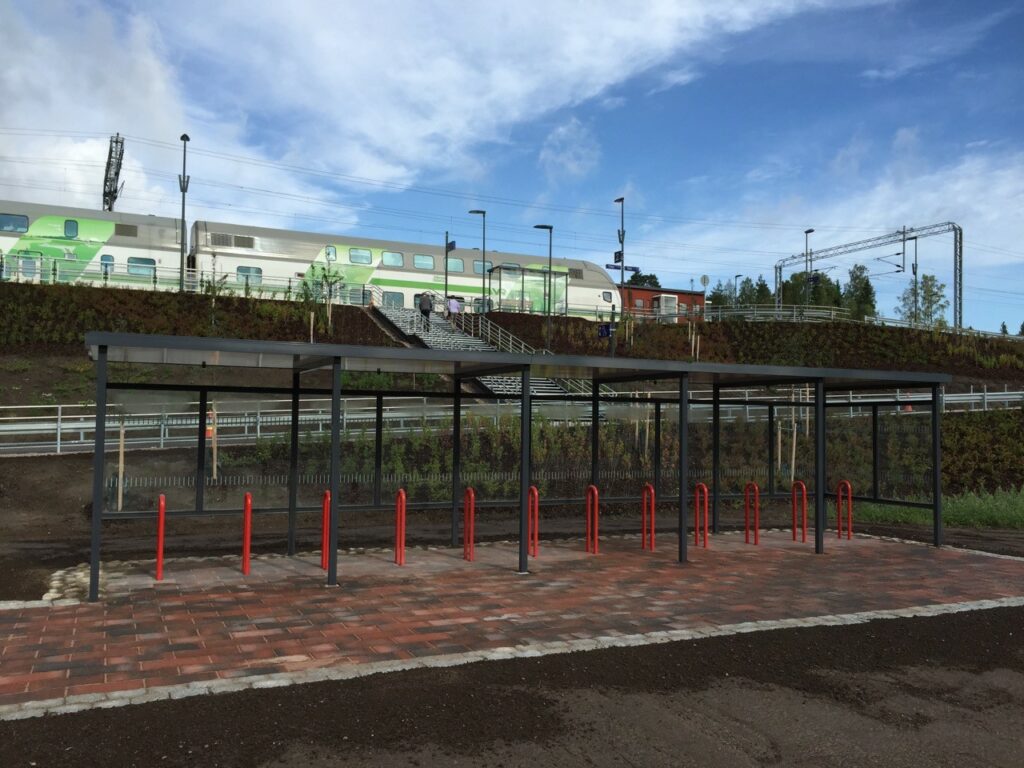
A reference installation of AluShel’s CPF bicycle shelter, featuring five modules with 8 mm toughened glass and 12 red ARC bike racks surface-mounted on paved ground.
Traditionally, one of the biggest barriers to the popularity of park and ride has been the fear of an interrupted journey, together with the so-called first/last mile challenge. If reaching the facility, leaving a car or bicycle and getting to the platform is perceived as slow, unsafe or uncomfortable, potential users may choose to drive all the way to their destination instead. A park-and-ride facility must function as an attractive gateway to high-quality public transport.
Four steps to successful park-and-ride planning
Step 1: Location analysis and demand forecasting
The foundation of a successful project is choosing the right location in relation to the main traffic flows. A park-and-ride facility should be situated where it can intercept motorists before they reach the main congestion routes leading into the city centre.
- GIS and catchment area analysis: Planning makes use of geographic information systems and national travel surveys to identify the actual travel patterns and catchment areas of potential users.
- Demand forecasts: Capacity requirements are assessed in cooperation with the relevant local transport authorities. The Finnish Transport Infrastructure Agency’s surveys at long-distance railway stations, conducted in 2018, 2022 and 2024, provide a basis for comparing development needs across different types of stations.
- Looking ahead to the 2030s: Location planning must already take autonomous transport into account. In the future, park-and-ride facilities may also serve as drop-off and pick-up zones for autonomous vehicles, significantly changing the relationship between short- and long-term parking.
Step 2: User-centred design and service quality
Simply providing a sufficient number of parking spaces does not guarantee high occupancy. Convenience and perceived safety are what make a facility attractive to users.
- Physical features that improve appeal: A high-quality parking shelter, effective LED lighting and clear signage can increase use and help reduce vandalism. Traficom’s statistics confirm that improving safety and usability is a shared priority across all the most advanced MAL urban regions.
- Accessibility and a range of transport options: High-quality, covered bicycle parking with frame-locking facilities can significantly extend the catchment area of a park-and-ride facility. The Finnish Transport Infrastructure Agency and the ELY Centres have also invested specifically in improving bicycle parking at railway stations in 2024–2025, with a combined investment of approximately €500,000.
- User experience (UX): A sense of security is created through open sightlines, accessible routes and CCTV surveillance. Users should be able to see immediately where they can leave their vehicle safely and how to reach the platform via the shortest sheltered route.
Did you know? According to Traficom’s national overview of park and ride in Finland, all MAL urban regions are making significant efforts to develop bicycle park-and-ride facilities. It is the only development priority shared by every region, from Helsinki to Kuopio. The HSL section of the same overview states that, according to research, the lack of secure bicycle parking facilities is a significant factor limiting the use of bicycles for connecting journeys. This is why developing access-controlled bicycle storage facilities is one of the three key priorities for the HSL region in 2025.
Explore AluShel’s secure bicycle storage facilities here.
Step 3: Structural and technical solutions
Finland’s climate places exceptionally high demands on shelter structures. Snow, ice, sleet and significant temperature fluctuations all have a direct impact on how willing people are to leave their vehicles at a park-and-ride facility.
- The importance of weather protection: Covered parking protects vehicles from snow accumulation and freezing conditions. Users who do not have to clear snow and ice from their cars before driving home are more likely to use the same facility again.
- Modularity and scalability: Prefabricated modules make it possible to expand shelter capacity quickly without lengthy groundworks – an important advantage in growing railway station areas.
- Sustainable construction: Aluminium structures offer significant long-term benefits. Aluminium is lightweight yet strong, corrosion-resistant and does not require regular repainting in the same way as steel or timber structures. In line with lifecycle thinking, aluminium is also 100% recyclable.
- Technological readiness: Cable routes for electric vehicle charging points should be incorporated into the structures from the outset. Smart LED lighting with motion sensors saves energy during quiet periods while providing full illumination when users arrive.
Step 4: Maintenance, development and impact monitoring
An effective park-and-ride facility is not a one-off project. It requires continuous, data-driven optimisation.
- Measuring success: Performance is monitored through occupancy rates, seasonal variations and the impact on the area’s modal split.
- Digital services and integration: Fintraffic’s LIIPI information service (the national park-and-ride information service, which replaced HSL’s previous service in May 2024) provides real-time parking availability data directly to drivers’ navigation systems and mobile phones. Users can check whether parking spaces or charging points are available before arriving at the station. The information is also shared with HSL’s Journey Planner and other journey planning services through an open interface.
- Feedback and service levels: Maintenance operations, such as clearing snow from shelter roofs and access routes, should be governed by clearly defined service-level agreements to ensure consistent quality throughout the year.
AluShel’s solutions for park and ride
AluShel offers modern, high-quality shelter and parking solutions with carefully considered architectural design. They address the challenges of contemporary urban planning and multimodal transport connections. AluShel’s products are based on durable Finnish design and innovative material choices.
For municipalities and cities
For municipal decision-makers and urban planners, AluShel offers a long-lasting and economically responsible solution. The modular aluminium structure is an investment with a very long service life and minimal lifecycle costs (LCC). Aluminium’s natural corrosion resistance means that the structures do not need to be repainted as part of regular maintenance, saving municipal budgets over several decades.

The aluminium BAR 60L frame-locking bike rack and the long-lasting CPH bicycle shelter, manufactured from hot-dip galvanised steel.
AluShel’s shelters blend effortlessly into modern Scandinavian urban environments with their understated, elegant design. In addition, the high recyclability of the materials supports municipalities’ carbon neutrality targets and sustainable transport strategies. Prefabricated modules and straightforward procurement processes make budgeting and project implementation easier for the municipal sector.
Read our blog article comparing different materials.
You can also read our blog article comparing our different bicycle shelters.
For developers and contractors
On a construction site, time is money. AluShel’s modular parking structures are designed for quick and straightforward installation. As the components are delivered to the site largely prefabricated, on-site installation time is reduced to a fraction of that required by conventional construction methods. This minimises disruption in busy railway station areas and public transport hubs.
Typically, we deliver the foundation pads, which the customer transports to the site and installs in position. We then deliver the bicycle shelters and carry out the installation ourselves. This ensures that the product warranty remains valid. Naturally, the products can also be ordered with delivery only, if preferred.
Construction contracts typically include a separate contractual warranty, which in many cases is two years under the Finnish YSE 1998 general conditions for construction contracts. As our products are manufactured from hot-dip galvanised steel, aluminium or stainless steel, they are designed to withstand the contractual warranty period with ease. Read more about AluShel’s own product warranty in our FAQ.
The lightweight aluminium structure places less load on the foundations than heavy steel shelters, potentially reducing foundation requirements and saving on groundworks costs. AluShel provides contractors with comprehensive technical support, precise specifications and reliable delivery schedules, helping keep projects on track from start to finish.
For end users
In today’s busy everyday life, passengers value speed, convenience and comfort. AluShel’s shelters can transform an uninviting park-and-ride area into a safe and welcoming transport hub.
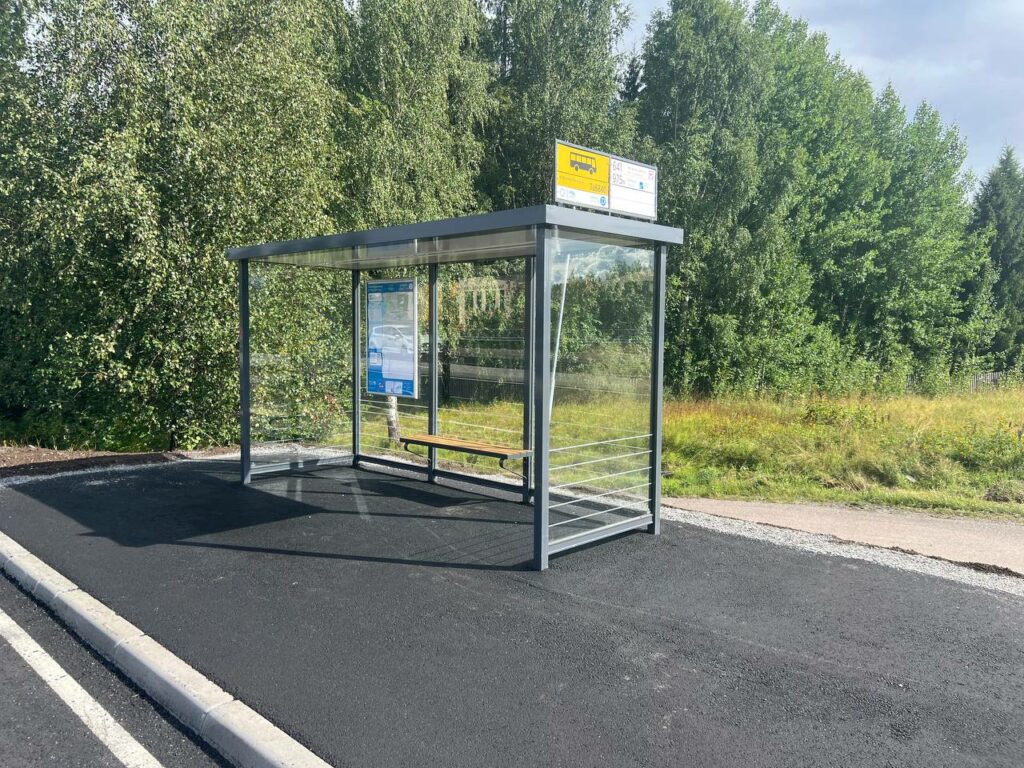
Reference installation: the F3 bus shelter in Tuusula (2024). Its maintenance-free aluminium structure and toughened glass glazing meet the demands of modern urban environments.
A high-quality bicycle shelter protects bicycles and e-bikes from snow, hail and intense sunlight.
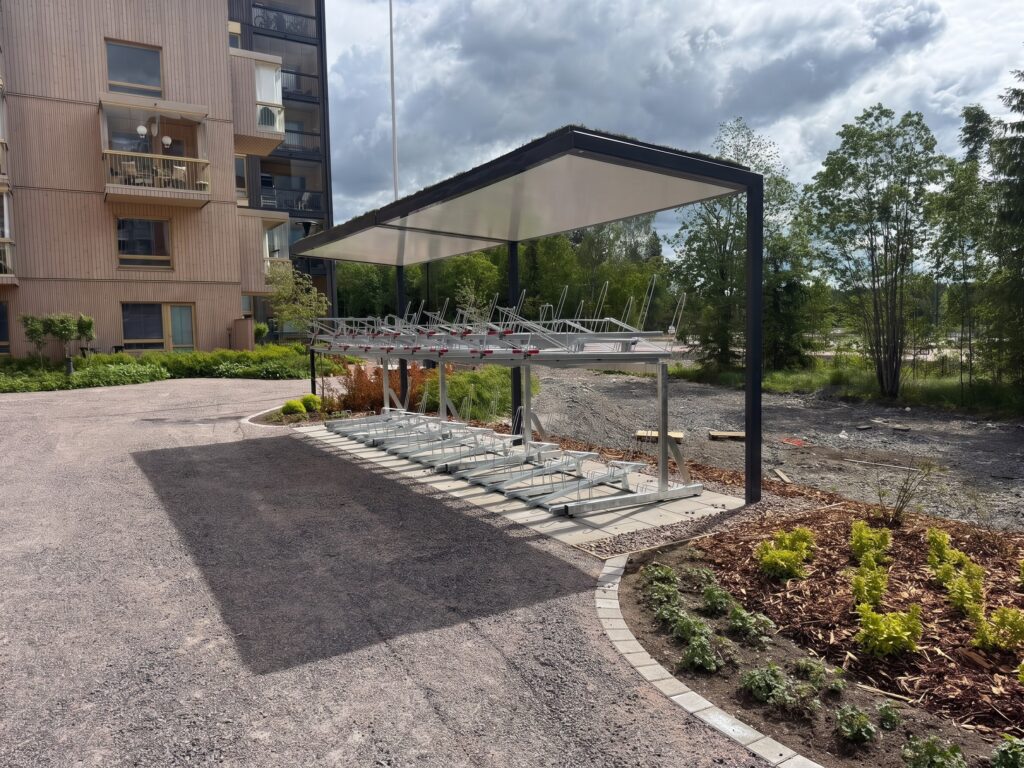
The stylish and cost-effective CPHL bicycle shelter, in a single-sided configuration and fitted with double-tier bike racks and a sedum green roof.
Well-designed, integrated lighting eliminates dark corners and creates a strong sense of security, even on late winter evenings. When each shelter module can easily accommodate an electric vehicle charging point and secure frame-locking bike racks, the end user’s daily journey becomes a more pleasant experience – one they will want to repeat every day.
Summary
Creating an effective park-and-ride facility requires a strategic approach that combines careful location analysis, user-centred service design, appropriate material choices and digital monitoring. By taking these four steps into account from the outset, park-and-ride facilities can become genuinely attractive transport hubs that increase public transport use and reduce emissions.
AluShel is an experienced and reliable partner in the development of smoother, more sustainable urban environments. Contact AluShel’s specialists at the early planning stage of your project. Together, we can design a scalable, weather-resistant and modular park-and-ride solution tailored to your needs and built to serve local communities for decades to come.