


Bus Shelters for Different Urban Environments
How do you choose the right bus shelters for different urban environments? Bus shelters are an essential part of urban transport infrastructure, providing protection from the weather, comfort and safety for public transport users. However, urban environments vary considerably, which means that bus shelter design must take the specific characteristics of each location into account. This article looks at how bus shelter solutions can be adapted to different urban environments and which factors should be prioritised when selecting a shelter.
Bus Shelters for Different Urban Environments
Urban areas range from densely built-up city centres to quieter suburban areas and residential neighbourhoods. Each setting calls for a bus shelter solution that meets the demands of local traffic volumes, weather conditions and the aesthetic character of the surrounding area.

The choice of bus shelter depends on the installation environment, the number of users, the risk of vandalism and many other factors.
Modularity and Adaptability
Modular bus shelters offer flexibility in urban planning. Shelters can be supplied in shorter or longer configurations depending on the expected number of passengers waiting at a stop at any one time. Thanks to their modular design, urban planners can easily increase or reduce the size of a shelter as requirements change.
In some urban areas, space is extremely limited, leaving little room for a bus shelter. In these situations, it may be important to choose a model supported by two posts rather than four. The shelter may also need to be shorter to prevent the rear overhang of a turning bus from hitting the structure.
Material Options and Choosing the Right One
The materials used in bus shelters affect not only their durability but also their appearance and suitability for the surrounding urban environment. AluShel offers several material options for its bus shelters, allowing the solution to be selected according to the intended location.
- Timber cladding: A good choice for natural settings and urban areas where a softer, warmer appearance is desired. Timber cladding is a natural material, but it generally requires more maintenance than other options. The location should be considered carefully to minimise the risk of vandalism.

AluShel’s timber-clad P3 bus shelter is an excellent solution for a wide range of urban environments.
- Toughened glass (with an anti-graffiti coating): Glass gives bus shelters a modern, open appearance. Its transparency also improves visibility and can help reduce opportunities for vandalism. An anti-graffiti coating makes cleaning easier and helps protect the surface from graffiti and other markings, making it a practical, long-lasting option.
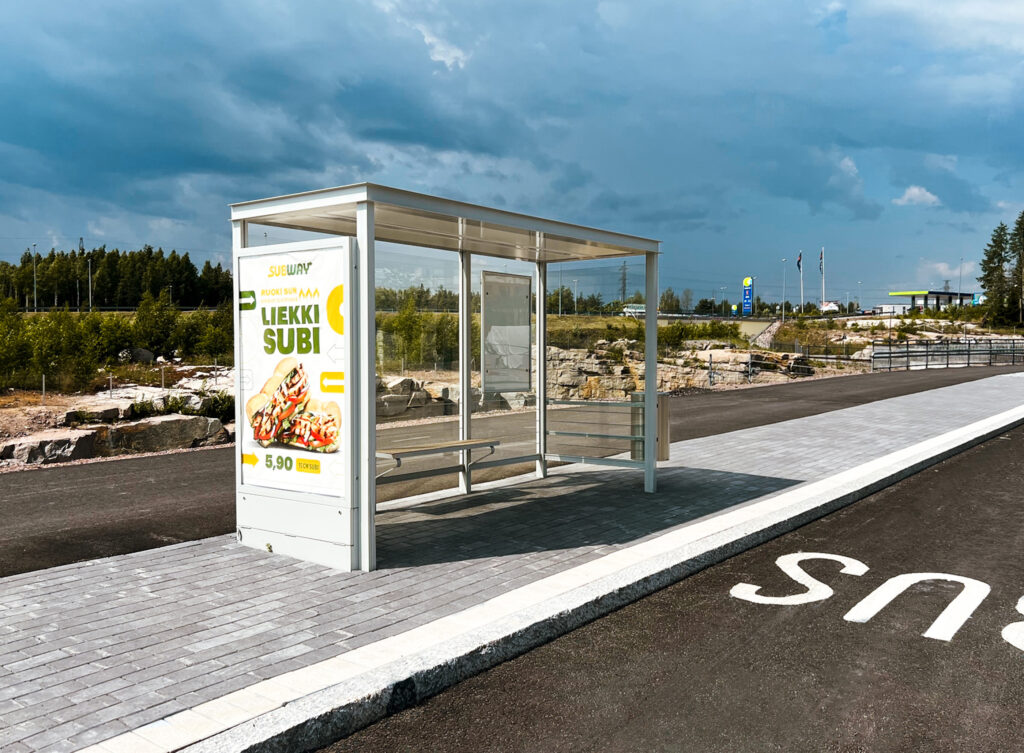
A bus stop needs a high-quality shelter. The V3 bus shelter integrates well with existing urban infrastructure. Made from aluminium, the V3 is a durable, long-lasting solution and is available with 100% recycled aluminium.
- Fibreglass-coated plywood: This combination provides a strong, durable material that performs well in a variety of weather conditions. The fibreglass coating protects the plywood against moisture and helps it withstand vandalism.
- Acrylic plastic: A lightweight, impact-resistant material that can be a good choice for locations where vandalism is a concern. Acrylic is also a cost-effective and durable alternative when a lighter material than glass is preferred. If a panel is kicked out of its frame as a result of vandalism, it can often be put back in place easily without breaking.
When choosing materials, it is also worth considering the character and identity of the surrounding urban environment. For example, a timber or glass solution that complements the architecture may be suitable for historic areas, while toughened glass and aluminium can emphasise a contemporary design in modern transport hubs.
It is important to choose a bus shelter for which spare parts are readily available. This makes it possible to return the shelter to service quickly if a component is damaged. You may also want to consider an inspection and maintenance agreement with the supplier to keep the shelters in good condition. A practical approach is to inspect them once or twice a year, for example in spring and/or autumn.
Durability and Load-Bearing Capacity
Climate and local weather conditions are important factors when selecting bus shelters. AluShel’s bus shelters are designed to withstand heavy snow loads and are suitable for locations where roads are salted and snow is cleared regularly. Road salting can cause significant corrosion, so in areas exposed to road salt it is worth choosing shelters with a coating designed for high corrosion resistance or shelters with aluminium structures. Aluminium is a lightweight and durable material that does not rust, making it an excellent choice for locations exposed to winter road salt.

The F3 bus shelter is made from aluminium and is one of Finland’s most popular bus shelters. It is an excellent choice for different urban environments.
Steel-framed shelters are also durable and particularly suitable for locations where bus stops are exposed to heavy use, such as busy urban streets. AluShel’s aluminium shelters are manufactured in Finland and can be made using 100% recycled aluminium, supporting sustainable development and reducing environmental impact.
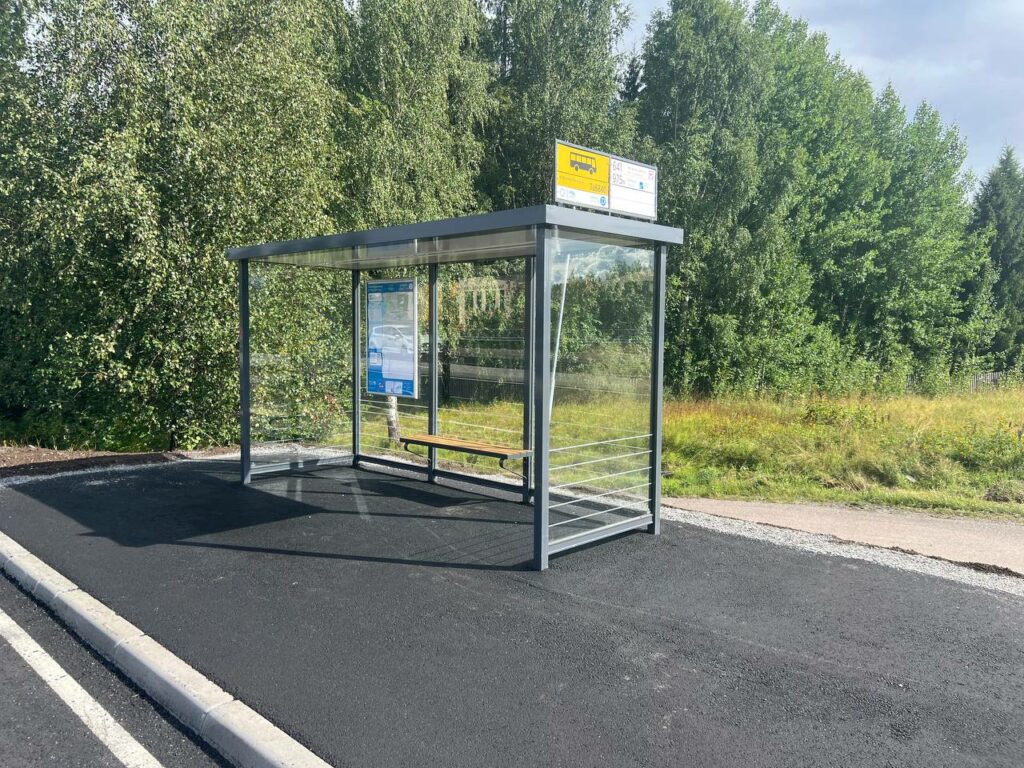
Reference project: F3 bus shelter in Tuusula, Finland (2024). Its aluminium structure and toughened glass panels meet the requirements of a modern urban environment.
Accessories and Comfort
Bus shelters can be equipped with a range of accessories to improve passenger comfort and safety. AluShel offers, among other things, the following options:
- LED lighting: Improves safety and comfort at the bus stop during hours of darkness. LED lighting is an energy-efficient and durable solution.
- Waste bins: Keeping the surroundings clean is important. Practical waste bins can be added to bus shelters and selected to complement the shelter’s design.
- Advertising displays: Advertising displays provide an effective way to use bus shelters for commercial purposes or to share information about public services.

A well-designed, high-quality outdoor waste bin is a practical addition to a bus shelter. The image shows AluShel’s new FORM waste bins.
Restricted Urban Spaces and Customised Shelters
Densely built-up urban areas, particularly city centres, can present specific challenges when it comes to positioning bus shelters. AluShel shelters are available with a two-post structure and a shorter roof, making it possible to install them in confined spaces without the rear overhang of a bus hitting the shelter. This is particularly important in densely populated and built-up areas, where space is limited and shelters need to make efficient use of the available area.

A steel-framed bus shelter without side walls, featuring a sloping roof that can also be supplied in a shorter configuration, is an excellent option for different urban environments.
AluShel’s bus shelters have a modular design, and their roofs can withstand snow loads of up to 200 kg per square metre, making them highly durable in Finnish winter conditions. Like bicycle shelters, bus shelters can be adapted to different dimensions and combined into shorter or longer configurations as required.
Versatile Design Options
AluShel offers a wide range of design options to suit different urban environments. The range includes flat-roofed, curved-roof and sloping-roof bus shelters that can be selected to complement the architecture and requirements of each location. Their durability, modular design and versatile material options make them a suitable choice for a wide range of urban environments.
Summary
Choosing a bus shelter for an urban area requires careful planning and consideration of the specific characteristics of the location. Modularity, a range of material options and durable construction help ensure that bus shelters meet both practical requirements and aesthetic expectations. AluShel’s range includes bus shelters for different urban environments. With experience gained from delivering more than 2,500 shelters and a comprehensive product range, we can meet the needs of a wide variety of urban settings.