

The Environmental Sustainability of Street Furniture
Considering environmental sustainability in the planning of public transport and active travel infrastructure is an essential part of sustainable urban development.
The environmental sustainability of street furniture is an important part of building a greener future. Architects and designers can make a positive contribution to the environment by choosing durable and recyclable materials and considering the entire lifecycle of bicycle racks at every stage.
Let’s take a brief look at material choices, lifecycle management, user-friendliness and environmental certifications.

The P3 bus shelter is manufactured using 100% recycled aluminium and Finnish timber, helping to make street furniture more environmentally sustainable.
Sustainable material choices:
The environmental sustainability of street furniture starts with material choices. Environmental considerations are becoming increasingly important when selecting materials. Renewable and recycled materials, such as recycled aluminium, can offer viable alternatives to conventional metals. Using these materials helps reduce the carbon footprint and promotes sustainable development.
When considering sustainable materials, it is also important to think about which locally sourced materials can be used. The most environmentally friendly option would be to use locally produced materials and solutions, as this helps reduce emissions caused by transportation, for example.
AluShel is the only bus shelter manufacturer to use 100% recycled aluminium in all its aluminium-framed shelters. We also use Finnish timber, such as pressure-treated spruce and thermally modified pine, as seen in the P3 bus shelter pictured above.
Lifecycle management:
Environmental sustainability is not limited to the materials selected. It also involves managing the entire lifecycle of street furniture. Environmentally conscious design requires architects and designers to consider how easy products are to maintain and whether they can be recycled at the end of their useful life. Modular structures can simplify maintenance and make it possible to replace individual components, extending the service life of bicycle racks, bus shelters and bike shelters. For example, it is worth considering how a shelter’s structure affects the ease, speed and cost of replacing glass panels.
Preventive maintenance also helps extend the service life of street furniture. This means addressing potential problems before they become more serious. AluShel’s additional services can help with this: our maintenance and servicing programme and extended warranty. A pre-agreed maintenance programme helps extend a product’s lifecycle and keeps the solution functional and in good condition, making it more user-friendly and appealing. It also helps avoid unpleasant and costly surprises, as maintenance is carried out at an agreed price.
User-friendliness and the environment:
Environmentally friendly solutions should not compromise the user-friendliness of street furniture. On the contrary, good design should encourage cyclists, for example, to make active use of bike shelters and bicycle racks. Practical features such as clear signage, lighting and optimal use of space help ensure that bicycle parking facilities are used efficiently, thereby improving their environmental performance.
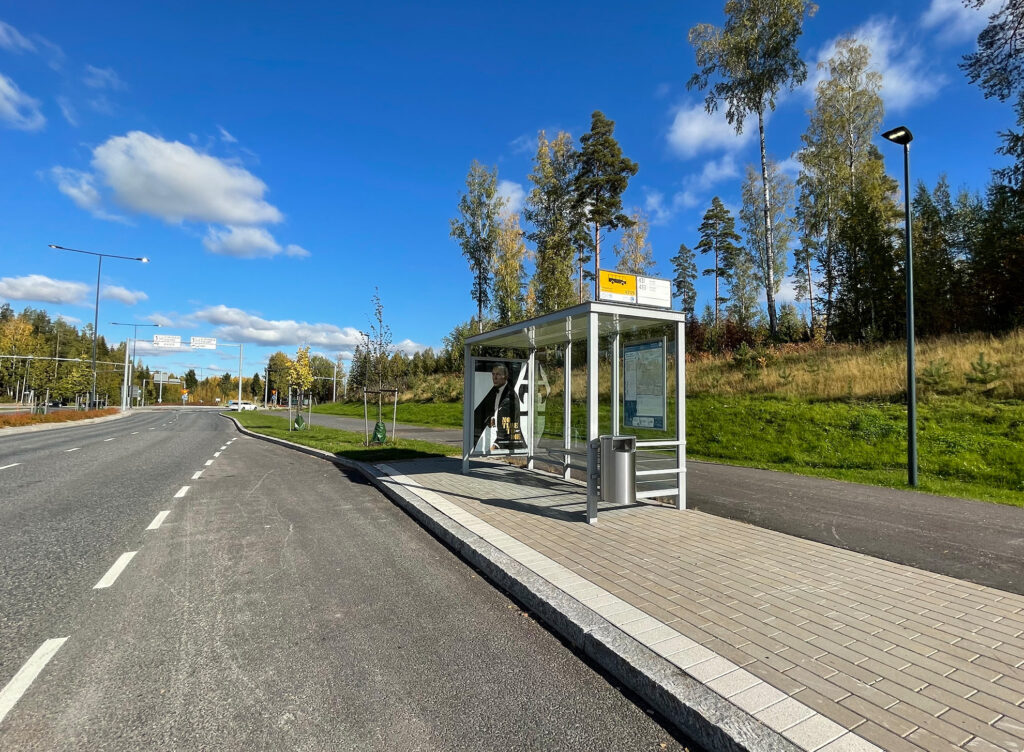
Manufactured in Finland by AluShel, this bus shelter is made from 100% recycled aluminium and is equipped with a litter bin manufactured in Finland.
Small additions can also improve user-friendliness, such as litter bins placed near shelters. People often empty rubbish from their pockets or eat an energy bar when arriving at or leaving a destination. It therefore makes sense to position litter bins close to bus shelters, bike shelters and bicycle racks. These simple solutions encourage people to take care of their surroundings, which in turn has a positive impact on the urban environment. The connection between user-friendliness and environmental sustainability highlights the importance of well-designed cycling infrastructure.
Environmental certifications and standards:
When considering the environmental sustainability of street furniture, architects and designers should also take environmental certifications and standards into account. Certifications such as ISO 14001 can demonstrate a commitment to environmentally responsible practices and help ensure that the materials and manufacturing processes used meet high environmental standards.
Summary
By taking environmental sustainability into account when planning bicycle parking facilities, architects can help create a sustainable and pleasant urban environment. Choosing environmentally friendly materials, managing product lifecycles, prioritising user-friendliness and considering relevant certifications are all steps towards sustainable mobility and environmentally responsible urban planning. Together, these measures help create urban environments that encourage the use of public transport and cycling while taking environmental needs into account.
If you are wondering how to choose a functional bike shelter, we explore the topic in this blog article.