


How to Choose a Durable Bike Shelter: A Guide to Materials
High-quality bicycle parking is an essential part of modern urban planning. When selecting a durable bike shelter, the choice of materials has a direct impact on the project’s lifecycle costs and maintenance requirements. This article examines material options suited to Nordic conditions, their resistance to corrosion, and the benefits different installation methods offer to clients and contractors.
Design considerations for northern climates
The Finnish urban and residential environment places particularly demanding requirements on outdoor furnishings. Winter maintenance, mechanical impacts from bicycle lock chains, air pollution and road salt all contribute to a corrosive environment. In addition, structures must be designed to withstand the regionally varying snow loads specified by Finnish building regulations. Snow load capacity is a critical consideration for every bike shelter and cannot be overlooked in favour of aesthetics alone. Structural load-bearing capacity must be based on accurate strength calculations. For a long-lasting installation, the key priorities are low maintenance requirements, mechanical strength and protection against internal corrosion.

AluShel street furniture is commonly made from hot-dip galvanised steel, aluminium or stainless steel.
What is the best material for a bike shelter? A technical comparison of the options
The main materials used in the manufacture of street furniture and shelters are:
- aluminium,
- hot-dip galvanised steel,
- painted steel for waste bins (corrosion class C5), and
- stainless steel.
Each material has its own technically suitable applications.
Aluminium bike shelters – A lightweight choice with natural corrosion resistance
From a materials engineering perspective, aluminium is an excellent choice for Finnish urban environments. Its outstanding weather resistance is based on the metal’s natural ability to form a thin oxide layer when exposed to oxygen. According to materials science experts, this self-healing oxide layer effectively protects aluminium against corrosion, even when the surface is subjected to significant mechanical impacts in an urban environment. Aluminium is an exceptionally long-lasting material that does not require regular repainting and performs particularly well in the salty air of coastal areas.

CPF is a high-quality bike shelter. The image shows the shelter with bright red bicycle racks.
Aluminium’s low weight relative to its strength allows for slim, architecturally refined profiles without compromising structural rigidity or snow load capacity. For example, the modern, fully aluminium-framed CPF bike shelter offers a long service life for projects where maintenance costs need to be kept to a minimum. For projects requiring greater flexibility, the modular CPFA bike shelter can be supplied as an open or enclosed version, with or without glazing. Where a softer, more natural aesthetic is desired without compromising the durability of the frame, the CPP bike shelter, combining an aluminium frame with timber cladding, offers architects a wide range of design possibilities.
Hot-dip galvanised steel – Maximum mechanical durability
Hot-dip galvanising provides steel with exceptionally strong protection against mechanical wear. The immersion process forms layers of iron-zinc alloy on the steel surface. These layers withstand impacts and provide what is known as cathodic protection. If the surface is scratched, the surrounding zinc protects the exposed steel from rusting.
During hot-dip galvanising, molten zinc at approximately 450°C flows into structural components such as tubes through dedicated dipping and venting holes. It coats every square millimetre of both the internal and external surfaces.

The modern CPHL bike shelter with toughened glass glazing provides excellent weather protection and is fully compatible with BAR frame-locking bicycle racks.
Hot-dip galvanised steel is an ideal material when a bike shelter is installed in an area exposed to vandalism or in a location where snowploughs may hit the structure. The heavy-duty CPHL bike shelter makes use of this mechanical strength.
Stainless steel – A stylish and durable option
Stainless steel is an attractive material with excellent mechanical strength, making it a durable choice for bicycle racks and high-quality waste bins. Its corrosion resistance is based on an invisible passive layer formed by the chromium in the steel. Stainless steel withstands impacts and vandalism very well and does not require painting for protection.
However, certain material properties must be taken into account in urban environments. Standard stainless steel (grade AISI 304) is susceptible to pitting corrosion caused by road salt (chlorides), as well as tea staining caused by airborne contaminants. Without regular cleaning, brownish discolouration can develop on the surface, affecting the product’s appearance even though the structure itself remains strong. In marine and coastal environments, or alongside heavily salted roads, acid-resistant stainless steel (AISI 316) is recommended, as it offers significantly better resistance to chlorides. Stainless steel is therefore not entirely maintenance-free: regular washing and cleaning are needed to keep it looking presentable.
C5 corrosion category – The highest level of atmospheric protection
C5 corrosion protection (ISO 12944) is the highest atmospheric corrosion protection category. It is achieved through a multi-coat paint system, often combining epoxy and polyurethane coatings, and requires thorough abrasive blast cleaning of the surface. This method is used in coastal areas, industrial environments and alongside roads to protect steel structures against very high levels of chemical exposure, such as salt and air pollution. C5-class painted steel provides excellent long-term durability in demanding environments. We use C5-class steel in our waste bins when customers choose a painted FORM waste bin.
Powder zinc coating – Limited protection under heavy mechanical stress
Powder zinc coating (electrogalvanising combined with powder coating) produces a neat, even painted finish, which is why it is often used for more affordable outdoor furnishings. However, the corrosion protection provided by this method is relatively thin and relies entirely on the integrity of the paint film. Unlike hot-dip galvanising, powder zinc coating does not form a thick alloy layer with the steel or provide the same level of mechanical durability or long-term cathodic protection if the surface is damaged.
Powder zinc coating alone (zinc-rich powder coating) does not protect the internal surfaces of structures. Since the zinc-rich coating cannot reach inside the tubes, the structures begin to rust from the inside due to moisture and condensation.
Powder zinc coating alone does not protect the internal surfaces of tubular structures. Since the coating cannot reach inside the tubes, the structures begin to corrode internally due to moisture and condensation. Powder zinc coating only protects the surfaces that are visible. The inside of the tubes remains bare steel, which can quickly corrode through when exposed to outdoor conditions.
Summary of the technical properties of different materials
| Material | Corrosion resistance | Mechanical strength | Maintenance requirements | Lifecycle cost (LCC) |
| Aluminium | Excellent (does not rust) | Good (high strength relative to weight) | Excellent (no painting required) | Very low (long service life) |
| Hot-dip galvanised steel | Very good (cathodic protection) | Excellent (high rigidity) | Good (withstands decades of use) | Low, particularly when powder-coated as a duplex system |
| Stainless steel | Good (susceptible to road salt and tea staining) | Excellent (very hard and tough) | Moderate (requires regular cleaning) | Low (high initial cost, long service life) |
| C5-class painted steel | Excellent in demanding environments | Excellent | Moderate (requires monitoring) | Medium |
| Powder zinc coating | Fair (susceptible to scratches) | Poor under impact (paint film can crack) | Poor (requires touch-up painting) | High (short replacement cycle) |
Lifecycle cost vs. low purchase price: Why the quality of surface treatment matters
In public procurement and construction projects, focusing solely on the lowest purchase price often leads to significant problems during and after the warranty period.
One of the most common risk factors in the market is the use of products with inadequate protective coatings or powder zinc coating alone, without a hot-dip galvanised base. Temperature fluctuations cause moisture to condense inside outdoor metal tubes. If the internal surface is bare steel, corrosion begins immediately.
One of the most common risk factors in the market is the use of products with inadequate protective coatings or powder zinc coating alone, without a hot-dip galvanised base. Temperature fluctuations cause moisture to condense inside outdoor metal tubes. If the internal surface is bare steel, corrosion begins immediately.
Under mechanical stress – for example, when heavy bicycle locks strike the shelter frame or racks – a thin powder-coated surface can crack easily. This allows moisture and road salt to penetrate beneath the paint film, triggering rapid corrosion under the coating. This can create problems for different parties involved in a project:
- Developers and contractors: Products may begin to deteriorate and rust while still under warranty. This can lead to costly claims handling, touch-up painting or, in the worst case, replacement of the entire furnishing at the contractor’s expense.
- Architects and landscape designers: Flaking paint and rust stains can quickly spoil the visual appearance and architectural coherence of a site, preventing the planned urban environment from remaining neat and well maintained.
- Municipalities and technical directors: Premature repairs, repainting and replacement create unexpected pressure on maintenance budgets. If an entire shelter has to be replaced, the work often involves costly groundworks and the removal of foundations, disrupting pedestrian and cycle routes and causing inconvenience to local residents.
For this reason, investing in high-quality aluminium or steel galvanised in accordance with the relevant standards can pay for itself within the first few years through negligible maintenance costs.
If steel is used, outdoor bike shelters should be hot-dip galvanised, as this process also protects the internal surfaces of the structure. The interiors of tubes treated with powder coating alone remain unprotected and vulnerable to internal corrosion. This is why we at AluShel use hot-dip galvanised steel rather than powder-coated steel.
Pair your shelter with the right bicycle racks – Frame locking is essential for security
Effective bicycle parking requires more than just a shelter: it also needs bicycle racks that meet the relevant requirements. Under current quality and procurement criteria, racks must allow bicycles to be secured by locking the frame.
Different solutions can be selected to suit the durability and design requirements of each site:
-
- BAR frame-locking bicycle rack is a versatile product family available in mechanically robust hot-dip galvanised steel and a lightweight aluminium version. Watch the BAR bicycle rack product video here.

BAR frame-locking bicycle rack and CPH bike shelter
-
-
- For narrower spaces and sites where space needs to be used efficiently, the ARC bicycle rack offers a similar level of protection.
- Watch the ARC bicycle rack presentation video here.
-

CPH-HKL bicycle shelter and ARC bicycle racks installed in Ainola, Järvenpää.
- Where the aim is to benefit from aluminium’s excellent corrosion resistance, the stylish BRANCH bicycle rack meets the requirements of modern urban planning.

BRANCH bicycle racks installed in Kirkkonummi. The bright red racks give the overall installation a fresh look.
- For more traditional bicycle parking with a front-wheel holder and a frame-locking bar, the hot-dip galvanised CRL bicycle rack is a suitable option.
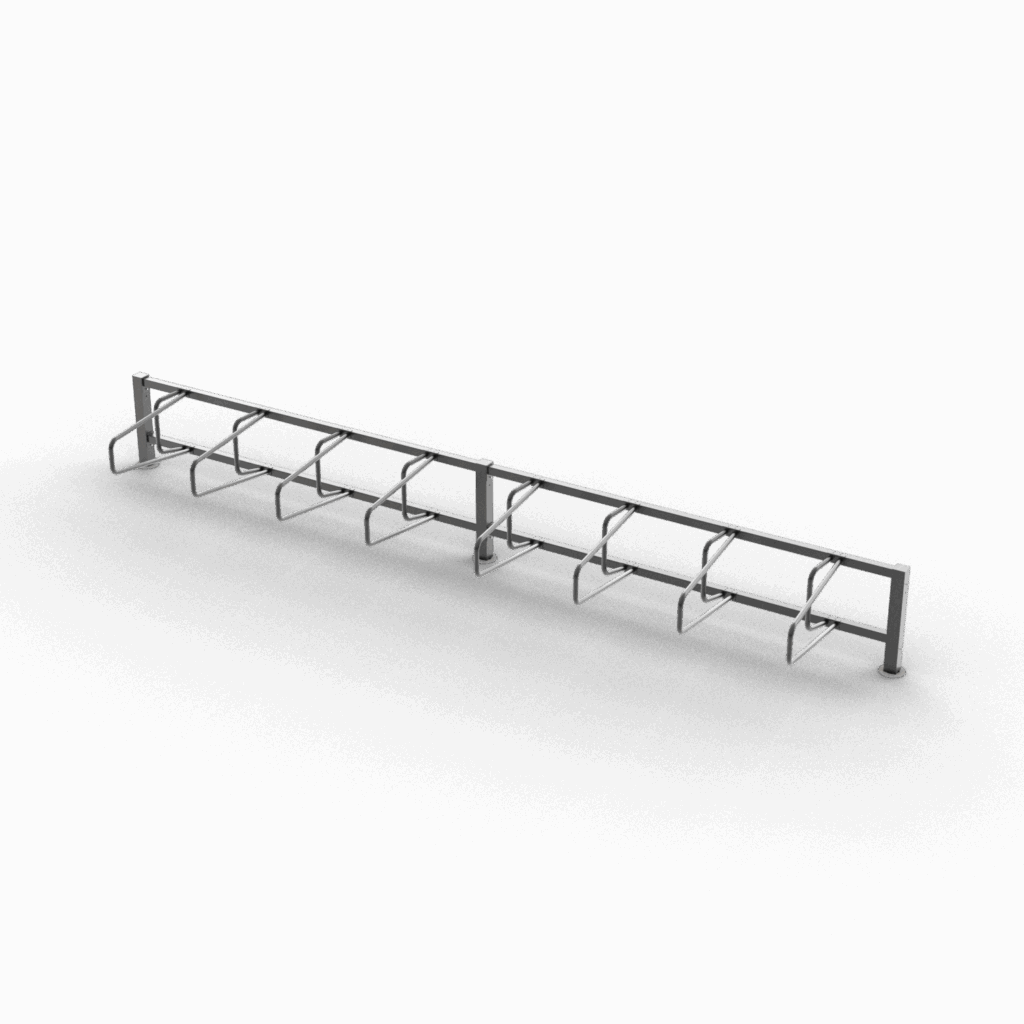
The recess-mounted CRL bicycle rack, with a wider 600 mm spacing between bicycles, makes parking easier.
- Where permanent installations are not possible or the arrangement is temporary, the movable PIPE RACK bicycle rack (available in hot-dip galvanised or stainless steel) offers flexibility.
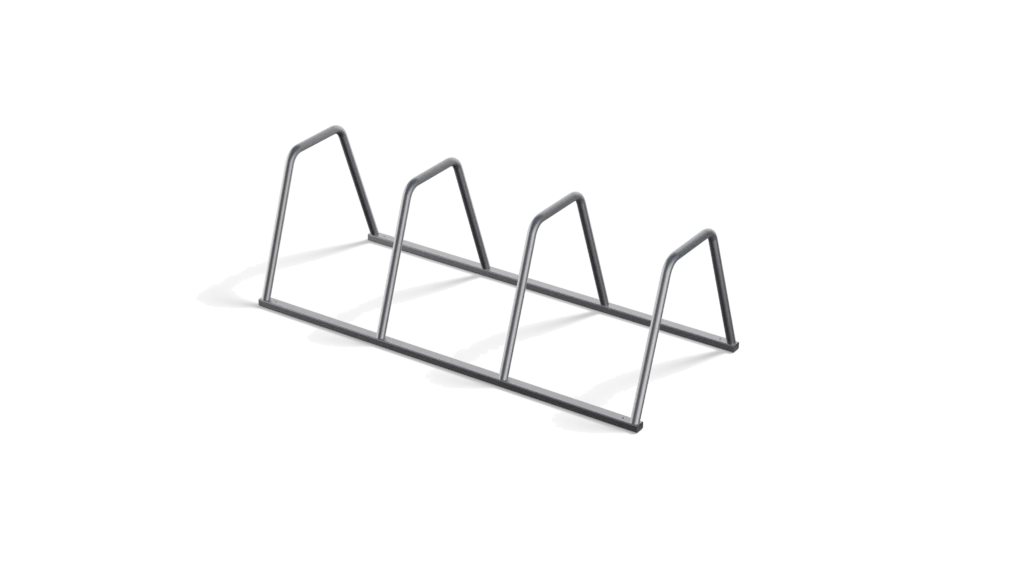
PIPE RACK – article image. PIPE RACK is an affordable bicycle rack with a secure frame-locking bar.
- For high-end architectural settings, the FRAME bicycle rack, available in powder-coated aluminium or stainless steel, is a suitable choice.
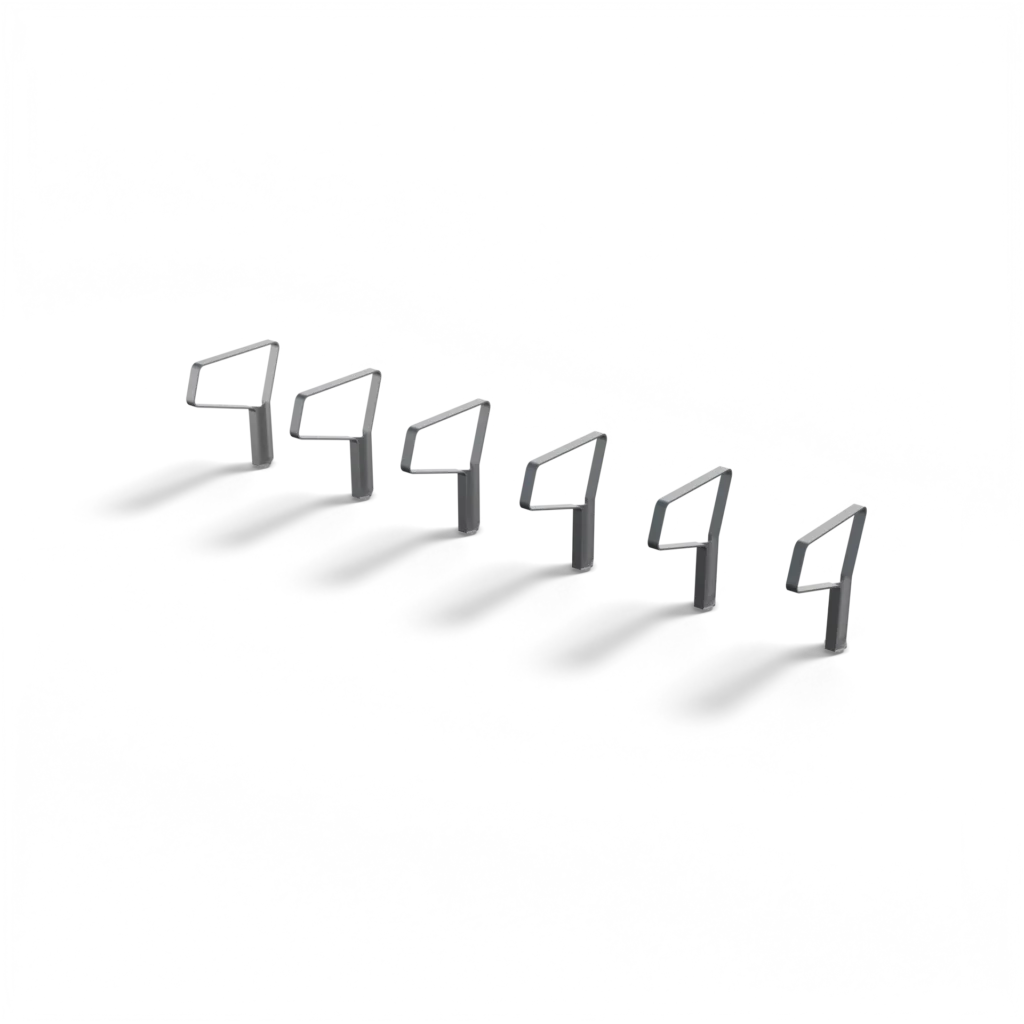
FRAME is a minimalist rack for two bicycles. Its unique single-point fixing makes cleaning and winter maintenance of the surrounding area significantly easier.
Efficient logistics and installation help reduce on-site costs
In addition to material choices, the overall cost of a bike shelter is significantly affected by installation efficiency and the number of hours spent on site. AluShel’s logistical solutions are designed to minimise risks in infrastructure construction and building-site operations:
Depending on the model, a bike shelter can be delivered to the site as a prefabricated unit already installed on a concrete slab. In this case, the client and main contractor are only responsible for the necessary groundwork and earthworks. The shelter can then be lifted directly into position, completing the installation in one operation. This saves considerable time and helps prevent prolonged disruption in the surrounding urban environment.
Other models, such as the CPHL bike shelter, use separate concrete footings. These are delivered to the site in the first phase, with the client responsible for setting them out and installing them at the correct level. AluShel then delivers the shelter itself and carries out the final installation efficiently on site, ensuring installation quality and continuity of the warranty. This phased approach allows installation work to proceed flexibly alongside other groundworks.
Recommendations for procurement processes and tender specifications
When the objective is to procure a durable bike shelter, it is worth comparing the lifecycle benefits of different materials rather than focusing solely on the lowest purchase price. Technical directors and procurement decision-makers should specify clear requirements for material corrosion protection and the required snow load capacity in their tender documents. This helps ensure that public investments stand the test of time, reduce maintenance costs and keep urban environments looking their best.